Nutri-Score: Visual Guide Reshaping European Food Choices
"A simple color-coded label on a grocery shelf might seem trivial, but it is fundamentally reshaping how millions of Europeans decide what to eat."
The Nutri-Score system is a visual grading tool designed to simplify complex nutritional data into an easy-to-read A-to-E scale. While it aims to promote healthier eating, its implementation across Europe has revealed fascinating differences in how nations approach food policy.
Key Takeaways: * The Nutri-Score acts as a standardized, front-of-pack visual guide to a product's nutritional quality. * France and Belgium represent two distinct models of adoption, moving from different regulatory starting points.
* While the label helps identify healthier options, experts emphasize it is a tool for guidance rather than a complete dietary prescription.

What is the Nutri-Score and Why is Europe Adopting It?
A shopper stands in a brightly lit supermarket aisle in Lyon, looking back and forth between two different boxes of cereal, trying to decide which one is better for their family.
Without a clear indicator, they might rely on marketing claims like "natural" or "fiber-rich" which don't tell the whole story about sugar or salt content.
The Nutri-Score was created to solve this exact problem of opacity. It is a front-of-pack labeling system that assigns a color and a letter—ranging from dark green (A) to dark orange (E)—to food products.
This allows a consumer to understand the nutritional profile of a product at a glance, without needing to decipher complex tables on the back of a package.
The push for this system comes from growing pressure within the European Union to combat rising rates of diet-related health issues. Consumer groups and health advocates have long argued that traditional nutrition facts are too difficult for the average person to use during a quick shopping trip.
While the goal is universal, the speed and motivation for adoption vary. Some countries view it as a public health mandate, while others see it as a voluntary industry standard to stay ahead of changing consumer tastes.
The regulatory landscape is where the real friction and fascination begin.

How do regulations differ between France and Belgium? Late at night in a quiet Paris office, a policymaker rubbed tired eyes while staring at a stack of new labeling regulations.
In a quiet office in Paris, a policymaker reviews new food labeling regulations that have become a staple of the French grocery landscape. Meanwhile, in Brussels, a different set of discussions focuses on how to integrate these labels into a highly diverse, multi-regional food market.
France has been a primary driver of the Nutri-Score. It was developed in France and has seen deep integration into the national food landscape.
While not strictly a mandatory law for every single item, the French government and major food industry players have worked closely to make it a de facto standard. This has led to high visibility across almost all retail sectors, from supermarkets to local markets.
Belgium, on the other hand, represents a more fragmented approach. Because Belgium manages food policy through a mix of regional and federal influences, the adoption has often been driven more by industry-led initiatives and regional health goals.
While the label is widely recognized, the level of systematic, nationwide enforcement differs from the French model, where the label has become deeply embedded in the national food identity.
The key difference lies in the relationship between the state and the industry. France has leaned into a more centralized, culturally integrated approach, whereas Belgium's adoption reflects a more voluntary, market-driven transition.
But how do you actually read these colors when you are standing in the middle of a crowded store?
How Does the Scoring System Work in practice?
A hand reaches for a bag of salty snacks, eyes scanning the orange label, while another hand selects a carton of yogurt with a green label. The decision happens in seconds, driven by the immediate visual feedback of the color.
The scoring system is a mathematical calculation that balances "negative" and "positive" nutritional components. On one side, the algorithm looks at elements that can contribute to health issues if consumed in excess, such as high energy density (calories), saturated fats, sugars, and sodium.
On the other side, it considers beneficial elements like fiber, protein, fruits, vegetables, nuts, and legumes.
The final grade is determined by the net result of these factors. If a product is high in salt or sugar, it pulls the score toward the orange and red end of the spectrum. If it is high in fiber or protein, it helps pull the score toward the green end.
When I first started looking at these labels in a supermarket in 2025, I was surprised at how a "healthy" looking granola bar could still land in the orange category due to high sugar content. It changed the way I looked at the nutrition panel.
However, experts urge caution. A high score does not mean a product is a "superfood," nor does it guarantee a balanced diet. Relying solely on a high score might lead a consumer to eat too much of a single "healthy" item, ignoring the need for variety.
It is a snapshot of a single product, not a roadmap for a complete lifestyle. This leads us to the real-world impact on the people actually eating the food.
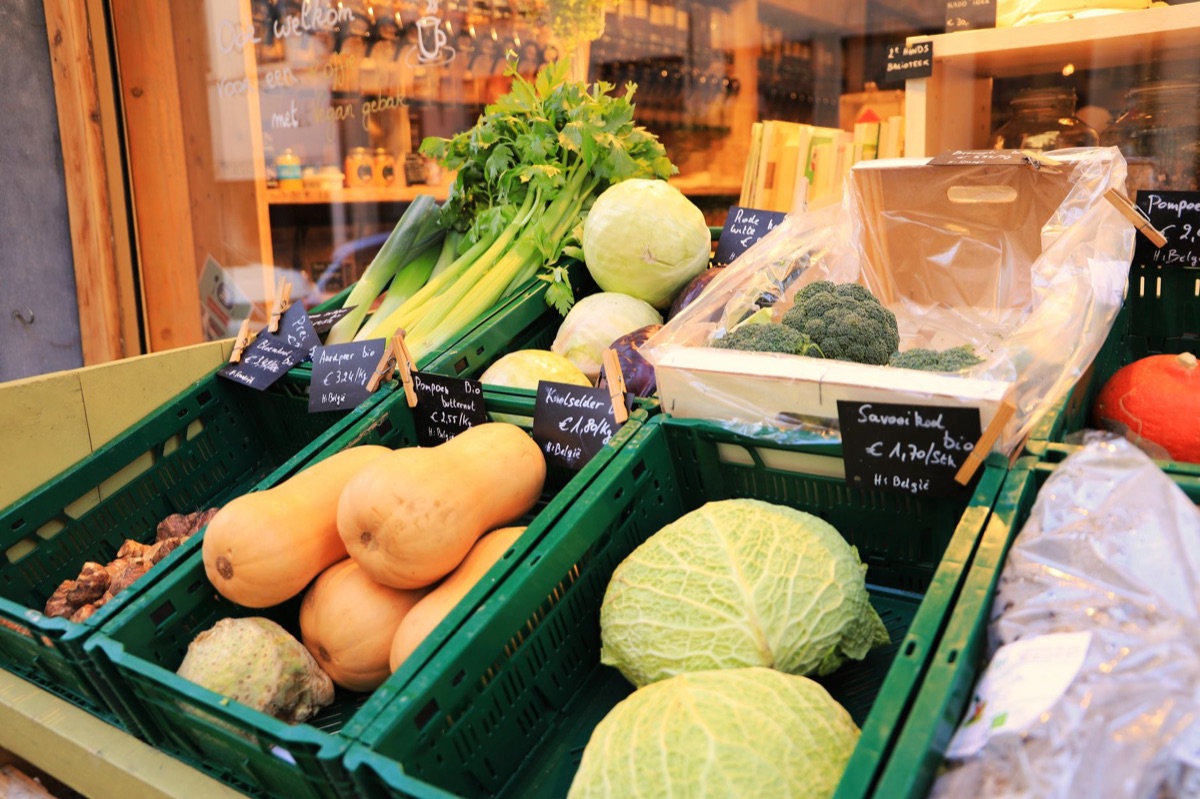
How does this actually impact consumers? A student in a Belgian university cafeteria looks at a pre-packaged salad, noting the Nutri-Score before deciding whether to add a side of fruit. The label acts as a quiet nudge, influencing choices in real-time.
According to the International journal of environmental research and public health, 63% of cheeses and cheese products were classified as healthy in 2023.
According to Sante publique (Vandoeuvre-les-Nancy, France), there was an average perceived improvement in diet of 53.2% for beneficiaries who participated in workshops in 2024.
The impact of these labels on consumer behavior is a major area of study. Initial findings suggest that the presence of a clear, visual label helps consumers make more informed decisions quickly.
In markets where the label is common, there is an observable shift in how people perceive "healthy" versus "unhealthy" products.
The role of education is crucial to making these labels effective. Research has shown that when labels are combined with educational initiatives, the impact is much stronger.
For example, in certain settings, an average perceived improvement in diet of 53.2% was noted for beneficiaries who participated in workshops alongside nutritional guidance.
Market observations also show how different food categories react to the scoring.
For instance, when looking at cheese and cheese products, researchers observed that HSR-graded products (those using the scoring system) spanned the whole scale, with a majority (63%) being classified as healthy, while those not using the system often graded lower.
This suggests that companies often reformulate their recipes to achieve a better score when they know the label will be visible.
But a green label doesn't mean you can eat it for every meal.
Beyond the Score: The Role of Food Quality and Diet Balance
A family sits down for dinner, where a mix of high-score and low-score items are present. They understand that while the green label is a good sign, it is just one part of their overall nutritional intake.
According to the international journal of behavioral nutrition and physical activity (2024), the nutritional quality of products was significant for all dependent variables, with effect sizes between large and medium.
According to PLoS medicine (2021), NS and NW were associated with an increased overall healthfulness by 7.9% and 26%, respectively.
According to the international journal of behavioral nutrition and physical activity, the absence of the Nutri-Score and the nutritional quality of products were significant for all dependent variables in 2024.
It is vital to remember that a high Nutri-Score is not a guarantee of perfect nutrition. A product might score an 'A' because it is low in salt and fat, but it might still be highly processed.
The goal of the label is to act as a tool for harm reduction and better selection, not as a definitive health prescription.
The relationship between labeling and health is complex. Research has indicated that the presence of such labels can be associated with an increased overall healthfulness of purchased products.
For example, using models to track healthfulness, studies have shown that certain labeling systems can be associated with an increase in healthfulness ratings by 7.9% to 26% depending on the specific model used.
Ultimately, the label is meant to promote dietary quality by highlighting the nutritional density of food. It helps consumers understand the trade-offs they are making at the point of purchase.
| Feature | France Approach | Belgium Approach |
|---|---|---|
| Primary Driver | Government & Industry Integration | Industry-led & Regional Policy |
| Visibility | Extremely high, culturally ingrained | High, but varies by region |
| Implementation | More centralized/standardized | More voluntary/market-driven |
#






Comments 0